The Wildlife Year
Seasons are dependable. Individual events are not. This calendar shows both, and tells you which is which.
Choose a month
January
Select a month above.
Timing confidence
Places to weigh
Two rhythms: dry and green
Across most of the safari regions of East and Southern Africa, the year divides into a dry season and a wet, or green, season. In the dry months, surface water disappears, vegetation thins and animals gather near rivers and waterholes. Visibility improves and game viewing becomes more predictable. This is why June to October is considered peak season across Botswana, Zambia, Zimbabwe, Namibia and much of South Africa.
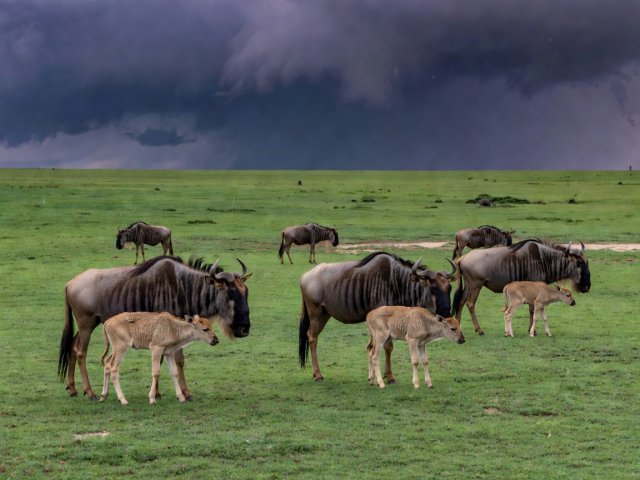
The green season reverses almost everything. Grass grows tall, animals disperse because water is everywhere, and storms build most afternoons. Yet it is also when antelope give birth, migrant birds arrive from Europe and Asia, and landscapes turn a deep, photogenic green. Prices fall and camps empty. For birders and photographers who enjoy dramatic skies, the green season is not a compromise but a choice.
East Africa’s double rains
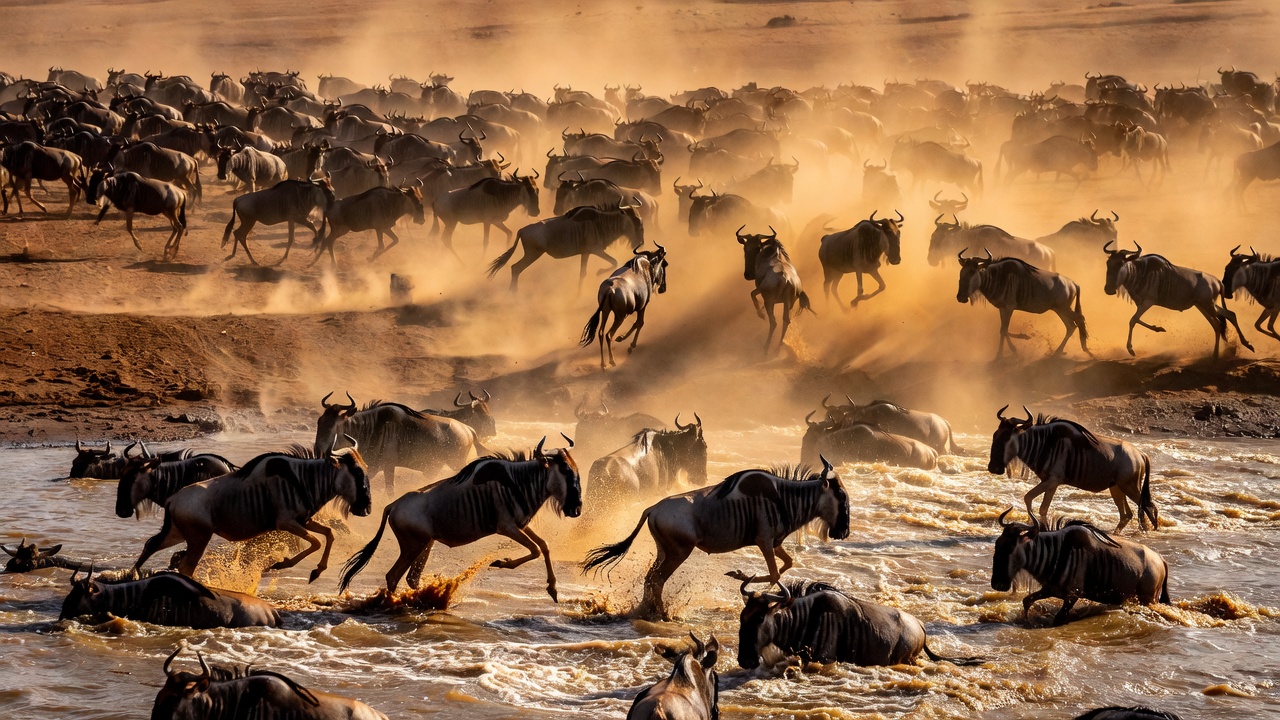
Kenya and Tanzania usually have two rainy periods: the long rains, roughly March to May, and the short rains, roughly November to December. The Great Migration of wildebeest and zebra moves in a broad loop through the Serengeti and into the Maasai Mara, following fresh grazing that those rains create.
The broad pattern is well established. Herds tend to calve on the southern plains around Ndutu from late January to March, move north-west through the western corridor around May and June, and reach the northern Serengeti and Mara from about July. Towards November, they often drift south again.
The detail is far less certain. River crossings can begin in late June or not until August. A dry spell can keep herds in one area for weeks; an early storm can send them away overnight. If one crossing is the purpose of your journey, consider longer stays in the north rather than more parks.
Season ledger by region
| Region | Dry peak | Green season | Reliability note |
|---|---|---|---|
| Serengeti & Ngorongoro | Jun–Oct | Nov–May (calving Jan–Mar) | Herd location varies; crater wildlife resident |
| Maasai Mara | Jul–Oct | Nov–Jun | Resident cats dependable; crossings not |
| Okavango & Chobe | Jun–Oct | Dec–Mar | Flood peak usually Jun–Aug, height variable |
| Kruger & Sabi Sand | May–Sep | Nov–Mar | Game viewing good all year in private reserves |
| Etosha | Jun–Oct | Dec–Apr | Waterhole viewing highly seasonal |
| Luangwa & Zambezi | Jun–Oct | Nov–Apr | Many camps close in the rains |
Shoulder months deserve a look
May, June and November often reward planners who can tolerate a little uncertainty. In early June, Southern Africa is drying out but not yet at full occupancy. In November, Kruger’s impala begin to give birth and the first storms bring a striking change of light. Shoulder months rarely produce the reliability of August, but they frequently offer better value and quieter sightings.
When weighing a month, ask three questions. Which species matter most, and are they resident or seasonal? How much heat, rain or cold are you prepared to accept? And how many nights can you afford to spend waiting for an uncertain event? Your answers will usually point to a clear window — and the routes page shows how to sequence it.