Routes with Rhythm
A route is not a list of famous names. It is a rhythm of travel days and settled days, and the balance decides how the trip feels.
Before the route: three pacing principles
Count transfer days honestly. A light-aircraft hop in Botswana may take an hour, but checking out, waiting at the airstrip and settling in at the next camp often consumes most of a morning. Road transfers in Tanzania, such as Ngorongoro to central Serengeti, can take most of a day, though you will see wildlife along the way.
Favour three nights per camp. Two nights gives you one full day. Three nights gives you two, which is usually when a guide has learned what you enjoy and where the animals are. Photographers often prefer four.
Put contrast, not repetition, in the sequence. Moving between two similar savanna camps adds travel without adding experience. Pairing a water camp with a dry land camp, or a walking camp with a vehicle-based one, makes each move earn its place.
Five sample routes
Select a route to see the sequence. Nights are suggestions to adjust, not packages to book.
Samburu, Laikipia and the Mara · 9 nights
- Nairobi1 night
Near Wilson Airport for an early flight north.
- Samburu2 nights
Arid-country species: Grevy’s zebra, reticulated giraffe, gerenuk.
- Laikipia conservancy2 nights
Rhino sanctuaries and walking options on private land.
- Maasai Mara conservancy4 nights
Long final stay for cats and, in season, crossings.
Trade-off: three regions show Kenya’s range, but each extra flight costs a half-day of game viewing.
Tarangire, Ngorongoro and Serengeti · 10 nights
- Arusha1 night
Arrival via Kilimanjaro International Airport.
- Tarangire2 nights
Elephant and baobab country, strongest Jul–Oct.
- Ngorongoro highlands2 nights
One crater descent; time permitting, Lake Manyara.
- Serengeti, two areas5 nights
Split between Seronera and the area where herds are expected.
Trade-off: driving the circuit is economical and scenic; flying in and out of the Serengeti saves long, dusty days.
Okavango, Khwai and Chobe · 10 nights
- Okavango water camp3 nights
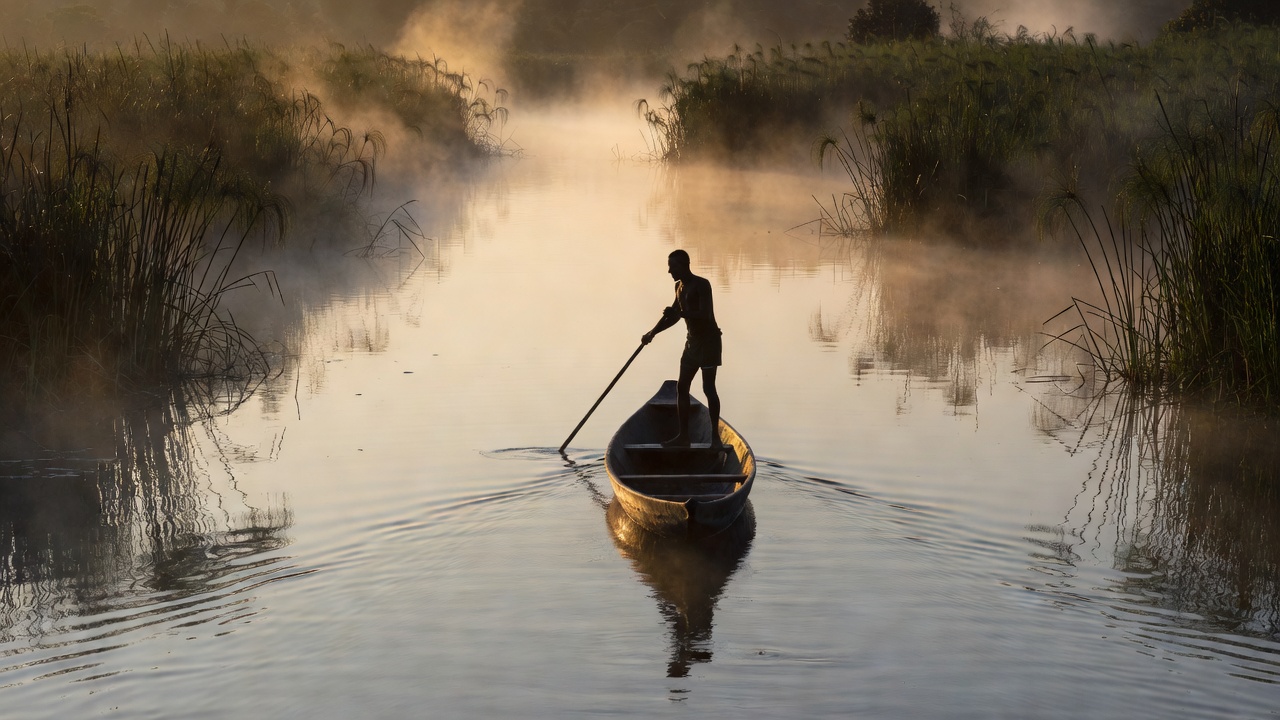
Mokoro and boat; best when the flood is high.
- Khwai or Moremi3 nights
Land-based drives; night drives possible in Khwai.
- Linyanti or Savuti3 nights
Remote, predator-rich, few vehicles.
- Victoria Falls1 night
Flow is highest around Apr–May, lower by Nov.
Trade-off: Botswana’s low-volume model brings quiet sightings at a high nightly cost.
Windhoek to Etosha · 9 nights
- Windhoek1 night
Collect a 4x4; check spare tyres and fuel range.
- Okonjima or Waterberg2 nights
A break in the long drive north.
- Etosha, three rest camps6 nights
Okaukuejo, Halali and Namutoni for different waterholes.
Trade-off: independence and lower cost, but you do the spotting and the driving.
South Luangwa and Mana Pools · 10 nights
- South Luangwa riverside3 nights
Vehicle and night drives for leopard.
- South Luangwa bush camp3 nights
Walking between remote camps.
- Mana Pools4 nights
Floodplain walks among elephant; canoeing on the Zambezi.
Trade-off: deeply immersive and quiet; routing between Zambia and Zimbabwe adds a long travel day.
Photo-led adjustments
Any route above can be reshaped around the photograph. These expandable plans show how.
Swap breadth for depth
Remove one stop and add its nights to your strongest camp. Photographers rarely regret extra time where light and subjects are good; they often regret the transfer day.
Book the vehicle, not just the bed
A private vehicle means you can wait at a den through the golden hour. Ask camps whether off-road driving is permitted; it is common in private reserves and conservancies, prohibited on most public park roads.
Plan for both ends of the day
- Dawn: soft, low light and active predators.
- Midday: hides at waterholes, bird portraits, rest.
- Dusk: backlit dust and silhouettes; check park gate times.
Add one scenic flight
A doors-off helicopter flight over the Okavango or a balloon over the Serengeti turns patterns of water and herds into images impossible from the ground. Weigh cost against one extra camp night.
Choosing between the routes
If your priority is the migration, a Kenya or Tanzania route with a long northern or southern Serengeti stay is the natural starting point — timed using the wildlife calendar. If quiet and exclusivity matter more than any single event, Botswana’s concessions deserve weight despite the cost. If budget and independence lead, Namibia and Kruger make self-driving realistic. And if you want to feel the bush underfoot, Zambia and Zimbabwe’s walking traditions are hard to match.
None of these routes is a recommendation to book. They are frameworks to test your priorities against, before talking to an operator.