Your Safari Kit
Pack for cold dawns, hot middays, small aircraft and quiet colours. Less luggage nearly always means a calmer trip.
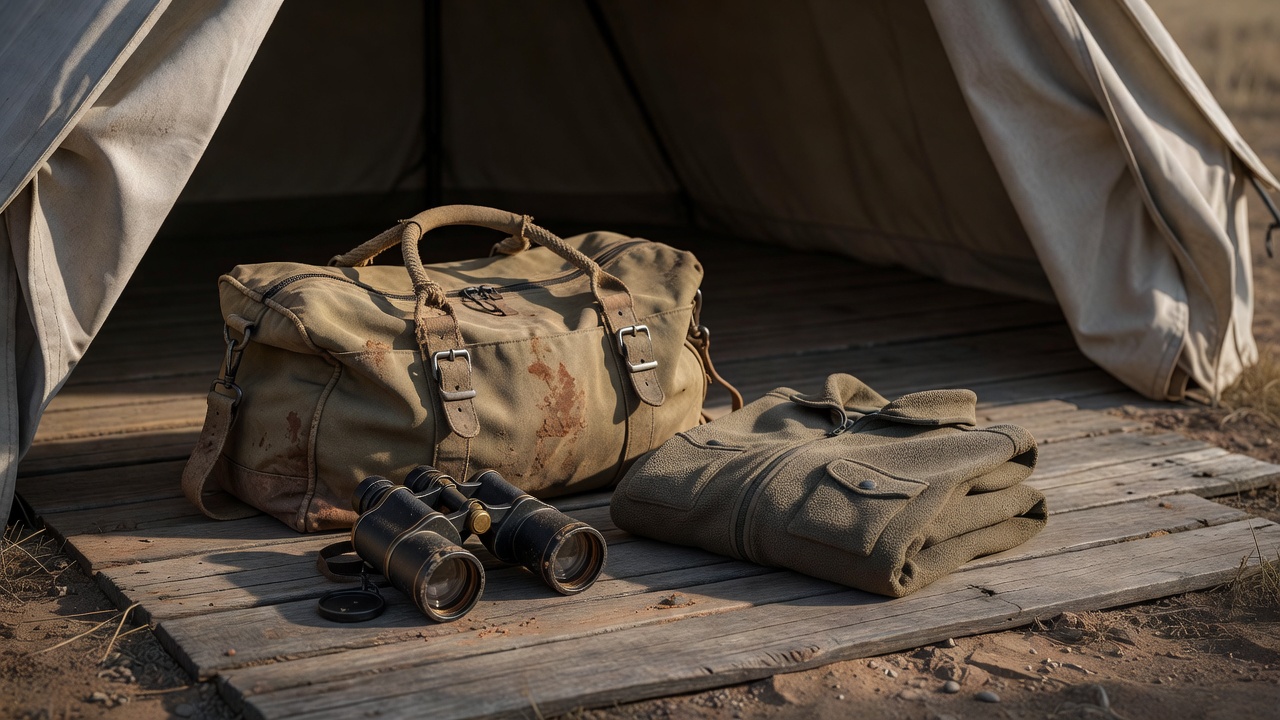
Start with the luggage limit
Many safari circuits rely on light aircraft such as the Cessna Caravan. Operators commonly set limits of around 15 kg to 20 kg per person, including hand luggage, and usually require soft-sided bags without wheels or rigid frames so they fit in small holds. Limits differ between operators and routes, so confirm yours before buying anything. Camera bags are sometimes allowed separately; sometimes they are not.
Most camps offer laundry, often daily and often included. That single fact allows a much smaller wardrobe than most first-time travellers expect. Three or four days’ worth of clothes is usually plenty for a two-week trip.
Colour matters more than brand
Neutral tones — khaki, olive, sand, tan — blend into the landscape and show dust less. White shows dirt quickly and can be conspicuous on walking safaris. In areas with tsetse flies, such as parts of Zambia, Zimbabwe and Tanzania, dark blue and black are known to attract them. Bright colours are discouraged on foot. These are practical conventions rather than strict rules, and lodges will not turn you away for a coloured shirt.
Tick as you pack
Your progress is saved in this browser only and is never sent to us.
0 of 0 items ready
Clothing
Optics and camera
Health and documents
Optics: binoculars first
A good pair of binoculars will be used more than any camera. An 8x42 offers a wide, bright view that is easy to hold steady; a 10x42 brings distant birds closer at the cost of a narrower field. Many guides carry a pair, but sharing during a sighting rarely works well. If you can bring only one optical item, choose binoculars.
Camera kit without excess
For most wildlife photography, a zoom in the 100–400mm or 150–600mm range covers the majority of situations. A wide-angle lens captures landscapes, camp scenes and the occasional elephant at close quarters. A beanbag resting on the vehicle frame is more practical than a tripod in most safari vehicles. Dust is the constant enemy: change lenses inside the vehicle with the engine off, and keep a blower in your pocket.
Health is a conversation, not a list
Many safari regions carry a malaria risk, and some countries require a yellow fever certificate depending on your previous travel. Requirements change, so the only reliable source is a travel health clinic or your doctor, ideally six to eight weeks before departure. Some South African reserves, such as Madikwe and those in the Eastern Cape, are considered malaria-free, which can matter for families with young children.
Once packed, revisit the route ideas to check whether your sequence includes cold highland nights, boat trips or walking days that need anything extra.